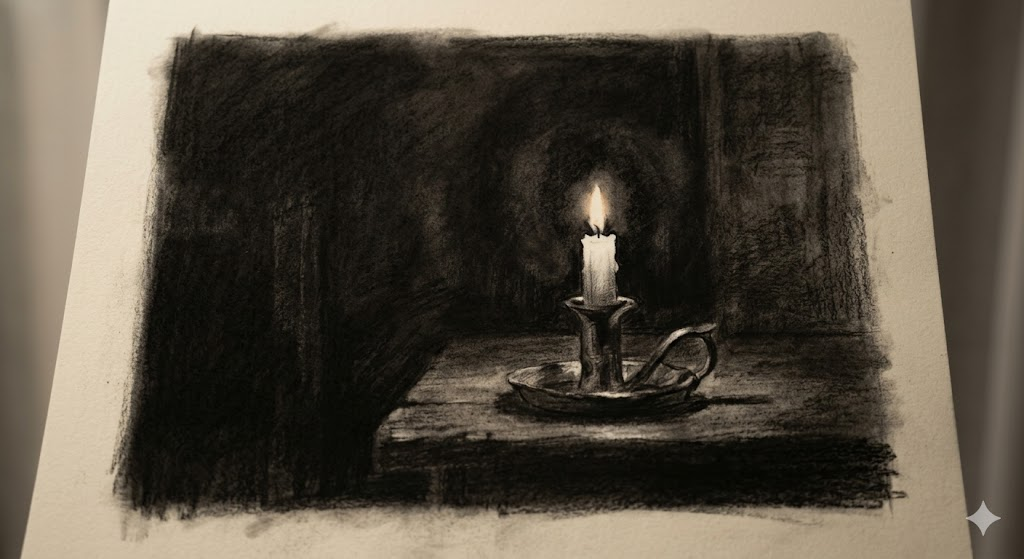
A Letter from Tomas:
To my fellow sojourners on The-Way.blog,
I want to pose a question that has been weighing on my heart: If the Old Testament is a perfect mirror of the New, what does that tell us about the arrival of our Savior?
When we look at the “Moedim”—the appointed feasts of the Lord—we see a blueprint. Many of us have been taught to look at the winter for the birth of Christ, but the historical and biblical “mirror” suggests something much deeper. If we look at the Day of Atonement (Yom Kippur) in the fall, we find the “Word becoming flesh” at the very moment the world requires a covering for sin.
The Tabernacle and the Manger
Think of the shepherds. During the fall, they lived in temporary shelters to guard their flocks. This perfectly mirrors Sukkot, the Feast of Tabernacles, where we celebrate God dwelling among us in humble, temporary booths. When the shepherds visited the manger, they weren’t entering a palace; they were entering a “Sukkah”—a place of humble beginnings that revealed a monumental truth: The Ark of the Covenant was no longer a chest of gold in a stone temple. It was moving.
This “internal Ark” was being established in the hearts and minds of all who would see and hear.
The 30-Day Window of Grace
The timeline continues to mirror our path today. Consider Purim, the celebration of a “reversal of destiny,” which occurs 30 days before Passover. In this gap, we find a season of Grace—a strategic pause given to us by God to reflect, repent, and rejoice.
It is a time to get ready for the ultimate sacrifice of the Cross. But we must be careful. We cannot afford to let our guard down. If we lose our focus, we risk being thrown into the darkness. We must remain faithful and strong, keeping the “internal Ark” of our hearts secure.
The Call to Action: The Present is Now
My friends, the research into history and timelines is a beautiful pursuit, but it leads to a single, urgent point of decision.
The call to action today does not require a ceremonial baptism or a grand public display. It requires the quiet, sincere acceptance that Christ is the Son of our Living God.
We must understand that tomorrow is not promised. I live with the sobering reality that if I should sleep and not wake up, I must know my soul is saved. I accept Christ. And I urge you: do not wait.
You do not need a crowd. Pray in the silence of your own heart. Ask Him to lead you. Ask Him to show you the “Way” to His Father’s Kingdom.
Open your eyes. Hear the words spoken in your heart. The time of Grace is now.
In Faith and Vigilance,
Reflect, Repent, Rejoice.
“The Word became flesh and tabernacled among us…” — John 1:14
A Closing Prayer for the Way
“Heavenly Father,
I come before You now in the quiet of this moment. I thank You for the Grace that was born in a manger and for the ‘mirror’ of Your Word that shows me the path home.
Lord, I recognize that tomorrow is not promised, and I do not wish to remain in the darkness. I open the door of my heart and my mind to You. I accept Your Son, Christ Jesus, as my Savior and the King of my soul.
I ask that You place Your Spirit within me—that my heart would become a dwelling place for Your Truth, a modern Ark of Your presence. Lead me in ‘The Way.’ Strengthen my heart so that I may remain faithful and vigilant, reflecting Your light in all I do.
Guide me into Your Kingdom, one step at a time in Jesus Christ name I pray.
Amen.”
Tomas
The-Way.blog
© 2026 The-Way.blog | Tomas. All Rights Reserved.
Footnotes & Scholarly References
Footnotes:
1. Colossians 2:16-17 – The Apostle Paul refers to the feasts as a “shadow of things to come,” establishing the “mirror” or “typology” framework.
2. The Lukan Account & Seasonality – Biblical scholars often cite the shepherds’ presence in the fields (Luke 2:8) and the course of the priest Abijah (Luke 1:5) to place Christ’s birth in the Hebrew month of Tishrei (Sept/Oct).
3. Jeremiah 31:33 – “I will put my law in their minds and write it on their hearts.” This marks the transition from the physical Ark to the spiritual indwelling.
4. Adar to Nisan – The Jewish calendar places Purim on the 14th of Adar and Passover on the 14th of Nisan, creating a precise 30-day “bridge” of preparation.
Selected Resources:
• Edersheim, Alfred. The Temple: Its Ministry and Services. (An essential text for understanding how the Feasts point to Christ).
• Stern, David H. Jewish New Testament Commentary. (Explores the Greek and Hebrew linguistic links between “The Word” and “The Tabernacle”).
• Lancaster, D. Thomas. The Holy Days. (A study on the prophetic significance of the Moedim).
• The Septuagint (LXX). (Referenced for the Greek term skēnoō used in John 1:14, meaning “to tabernacle” or dwell in a tent).
 The-Way
Leave a comment