Setting the Stage
A Study of 1 Corinthians 1:27
Through the Genesis Narrative
“But God has chosen the foolish things of the world to put to shame the wise, and God has chosen the weak things of the world to put to shame the things which are mighty.” — 1 Corinthians 1:27
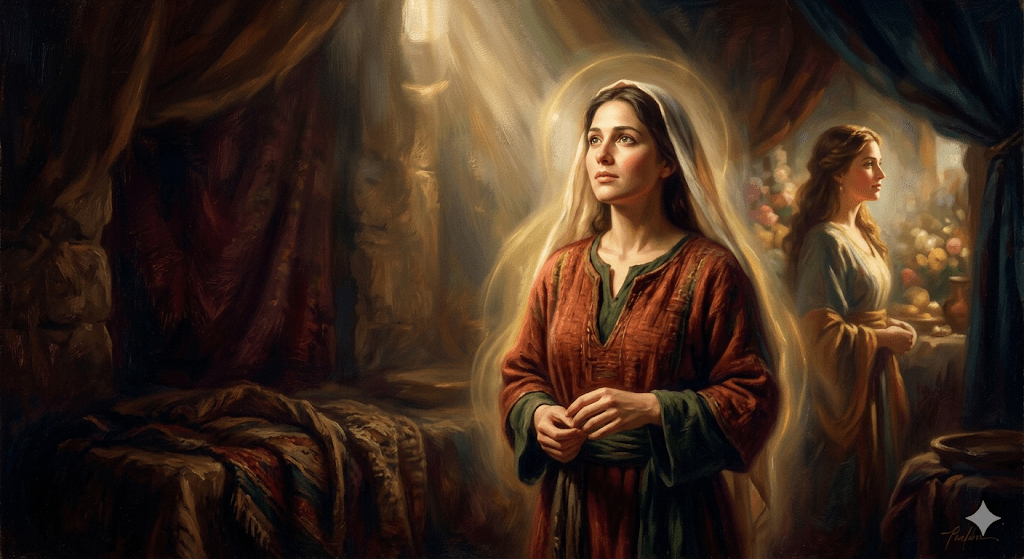
In the biblical economy, the spotlight of human favor rarely aligns with the light of Divine selection. We see this most poignantly in Laban’s tent, where two sisters—Leah and Rachel—become the living embodiment of a “battle for the heart.”
While the canonical text of Genesis identifies them simply as elder and younger, the Ancient Book of Jasher (referenced in Joshua 10:13, 2 Samuel 1:18, and 2 Timothy 3:8) provides a provocative detail: Leah and Rachel were twins.
Jasher 28:27-28
“For the wife of Laban was barren in those days, and bare no children, and also all his handmaids bare none to him. And the Lord afterward remembered Adinah the wife of Laban, and she conceived and bare twin daughters, and Laban called the names of his daughters, the name of the elder Leah, and the name of the younger Rachel.”
The Parallel of the Womb
The fact that Leah and Rachel were born to a barren mother brings them into a direct, symmetrical orbit with the Great Matriarchs. This was not a biological chance; it was a specific act of Divine destiny. Just as Esau and Jacob struggled within Rebekah’s womb, these sisters mirror the pattern of divine intervention seen in Sarah and Rebekah before them.
The Contrast: By day, the distinction was undeniable. Because of her beauty and intelligence, Rachel was the shepherdess, radiant and visible to the world. Leah was the “tender-eyed” sister, kept inside and hidden because she lacked her sister’s outward luster.
The Veil: By night, however, the physical distinctions dissolved. In the dark, the “unnoticeable” difference leveled the playing field, allowing the “unseen” sister to take the place of the “mighty” one.
The Divine Thread: From Provision to Promise
This narrative reveals a single thread that weaves perfectly through the history of redemption. By viewing Rachel’s line as the necessary “outer” strength that protected Leah’s “inner” promise, we see a foreshadowing of the relationship between John the Baptist and Christ Jesus:
The Forerunner (The Rachel/Joseph Line): Rachel, the visible shepherdess, produced Joseph—the one who “cleared the path.” Just as John the Baptist was sent to prepare the way, Joseph’s rise in Egypt saved the Israelites from famine, preserving the family so the promise could survive.
The Fulfillment (The Leah/Jesus Line): While Joseph saved the body, the line of Leah saved the soul. Through the “weak” and unloved sister, God chose to build the Line of Jesus Christ the Messiah. From her womb came Judah, and from the tribe of Judah through Tamar arose the King of Kings.
Why the “Twin” Connection Matters
| Character | Worldly Status | Divine Role | Typological Pattern |
| Rachel | Beautiful & Visible | Mother of Joseph | The Precursor (Physical Salvation) |
| Leah | Weak & Hidden | Line of Jesus Christ | The Fulfillment (Eternal Salvation) |
By viewing them as twins, we see a God who purposefully chooses the “weak” to put the “mighty” to shame. It forces us to look past the physical beauty that captivates the human eye and recognize the God who sees the Unseen. Just as the world focused on the brilliance of Rachel, God was masterfully working through the “tender eyes” of Leah to bring forth the Savior of the world.
The Irony of Divine Symmetry
There is a striking irony in this “Battle for the Heart.” In the previous generation, Rebekah used the cover of dim sight and a disguise to deceive Isaac into blessing the younger son, Jacob, over the elder. Now, the tables are turned: Laban uses the cover of darkness and a veil to deceive Jacob into marrying the elder daughter, Leah, instead of the younger.
While man uses deception to favor one over the other, God uses these very human failures to ensure His sovereign plan remains on track. Jacob’s preference was Rachel, but God’s purpose required Leah.
Our Perceived Weakness: The Modern Lens
If the “weak” and “tender-eyed” Leah—overlooked by her husband and hidden by her father—could be the chosen vessel for the Line of Jesus Christ the Messiah, it fundamentally changes how we must view our own lives today.
The Darkness is a Leveling Ground: Just as the difference between the twins was unnoticeable in the dark, our worldly status, physical appearance, and social standing disappear in the presence of God. He is not moved by what the world “sees” by day; He is moved by what He has planted in the heart.
Weakness as a Hidden Strength: We often pray for God to remove our “tender eyes” or our perceived inadequacies. Yet, 1 Corinthians 1:27 suggests that these are the very qualities God looks for. Your “weakness” isn’t a hurdle to your purpose; it might be the very reason God chose you to put the “mighty” to shame.
The Long View of Legacy: Rachel had the immediate affection and the visible “beauty,” but Leah was given the eternal legacy. If you feel “unseen” or “second choice” in this season, remember that God is likely building something through you that will outlast the temporal beauty of the world.
The God Who Sees the Unseen
We serve a God who subverts the wise and empowers the weak. Whether it is through the line of Leah or the redemption of Tamar, the message remains the same: Do not despise your hidden years. Like Leah in the tent, you may be hidden from the eyes of the world, but you are center-stage in the plan of the King of Kings.
The Song of the Unseen
There is a profound simplicity in the words we often teach children: “Little ones to Him belong; they are weak, but He is strong.” This isn’t just a nursery rhyme; it is the summary of the Leah and Rachel narrative. The world—and even Jacob—looked at Leah and saw only the “weakness” of her tender eyes and her hidden status. But in the economy of Heaven, that weakness was the invited space for God’s strength to manifest.
When we are at our “Leah moment”—feeling unloved, overlooked, or “tender-eyed” compared to the Rachels of the world—we find that His strength is made perfect in that very place. Leah’s life proves that you don’t have to be “mighty” to be the vessel for the King of Kings; you only have to belong to Him.
Conclusion: The Final Choice of the Heart
The “Battle for the Heart” did not end in Laban’s tent. We see its ultimate New Testament echo in the household of Bethany, where Mary and Martha repeated the pattern of Leah and Rachel:
Martha (The Rachel): Martha was “distracted with much serving” (Luke 10:40). Like the radiant, shepherdess Rachel, she was focused on the immediate, visible, and “mighty” tasks. She was active, capable, and busy doing the right thing, but with the wrong focus.
Mary (The Leah): Mary was “tender” and hidden, sitting at Jesus’ feet to hear His word. Like the obscured Leah, she was content to be “unseen” by the world as long as she was in the presence of the King.
The Good Part
When Martha complained about Mary’s lack of visible activity, Jesus did not validate her “mighty” service. Instead, He said, “Martha, Martha, you are worried and troubled about many things. But one thing is needed, and Mary has chosen that good part, which will not be taken away from her.” (Luke 10:41-42).
Leah was given the “eternal legacy” that Rachel could not take. Mary was given the “good part” that Martha’s service could not provide. The message of the “Two Sisters” remains the same across both testaments: God values spiritual alignment over physical activity. ### The Ultimate Legacy As we look back at the twins born to Adinah, the message of 1 Corinthians 1:27 rings with absolute clarity. The world will always rush toward the “Rachel” or the “Martha” in every situation—the visible success, the busy schedule, the obvious choice.
But our God is a Master of the “Night Shift.” He works in the places where the world cannot see. He uses the cover of our perceived weaknesses, our “tender eyes,” and our quiet moments at His feet to weave a lineage that ends in a Throne.
The takeaway for the believer is this:
Trust the Divine Reversal: When your plans for “visible success” are replaced by “hidden struggle,” know that God is protecting a deeper promise in your life.
Honor the Forerunner: Recognize that the “Josephs” in your life (the physical provisions) clear the path, but the “Judahs” (the spiritual promises) carry the eternal weight.
Choose the Good Part: Do not confuse activity with presence. Like Mary at His feet, do not be afraid to be hidden from the eyes of the world, for that is exactly where God does His greatest work.
The Battle for the Heart is won when we realize that being “weak” in the eyes of the world is the prerequisite for being “mighty” in the hands of God. From the unloved wife came the King of Kings. From your greatest struggle, He brings forth His greatest strength.
A Closing Prayer
Heavenly Father, we thank You that You are the God who sees the unloved and remembers the barren. We ask that You would open our eyes—not to the fleeting beauty of this world, but to the eternal purposes You have hidden within our own perceived weaknesses. Help us to trust the “darkness” of the seasons where we feel unseen, knowing that You are masterfully weaving the line of Your promise through our lives. When we are weak, remind us that You are strong. Let us praise You in our “Judah” moments, regardless of the validation of man. In the name of Jesus Christ The-Way, Amen.
Tomas
Footnotes & Scholarly Resources
Footnotes
- The Twin Theory: While the Masoretic Text of Genesis 29 identifies the sisters as elder and younger, the Book of Jasher provides the detail that they were twins born to Adinah, creating a biological symmetry with the twins Esau and Jacob.
- “Tender-eyed”: The Hebrew rakkot (Genesis 29:17) is often debated. While traditionally interpreted as a physical defect, it also suggests a “delicate” or “soft” nature that stood in stark contrast to the outward “brightness” and visibility required of a shepherdess like Rachel.
- The Book of Jasher: A non-canonical record referenced in the Bible (Joshua 10:13; 2 Samuel 1:18). It serves as a vital historical-literary resource for understanding ancient Jewish perspectives on patriarchal narratives.
- The Mary/Martha Typology: Scholars often link Leah and Rachel to Mary and Martha as a study in the “Active Life” (Martha/Rachel) versus the “Contemplative Life” (Mary/Leah), where the latter is often chosen by God despite being less “useful” in the eyes of the world.
Resources for Further Study
- The Holy Bible: Genesis 29-30 (The Narrative); 1 Corinthians 1:27 (The Theology); Luke 10:38-42 (The Mary/Martha Parallel); Matthew 1 (The Genealogy).
- The Book of Jasher (Sefer HaYashar): Specifically Chapter 28 regarding Laban and Adinah.
- Josephus, Antiquities of the Jews: Book I, Chapter 19, for a first-century historical perspective on the household of Laban.
- Matthews, V. H. (2004): Old Testament Parallels: Laws and Customs from the Ancient Near East. This provides cultural context on the legal rights of the elder daughter and marriage customs.
The New Bible Commentary (21st Century Edition): For deeper insight into the Messianic Lineage and the subversion of the “Elder/Younger” birthright patterns.
 The-Way
Leave a comment