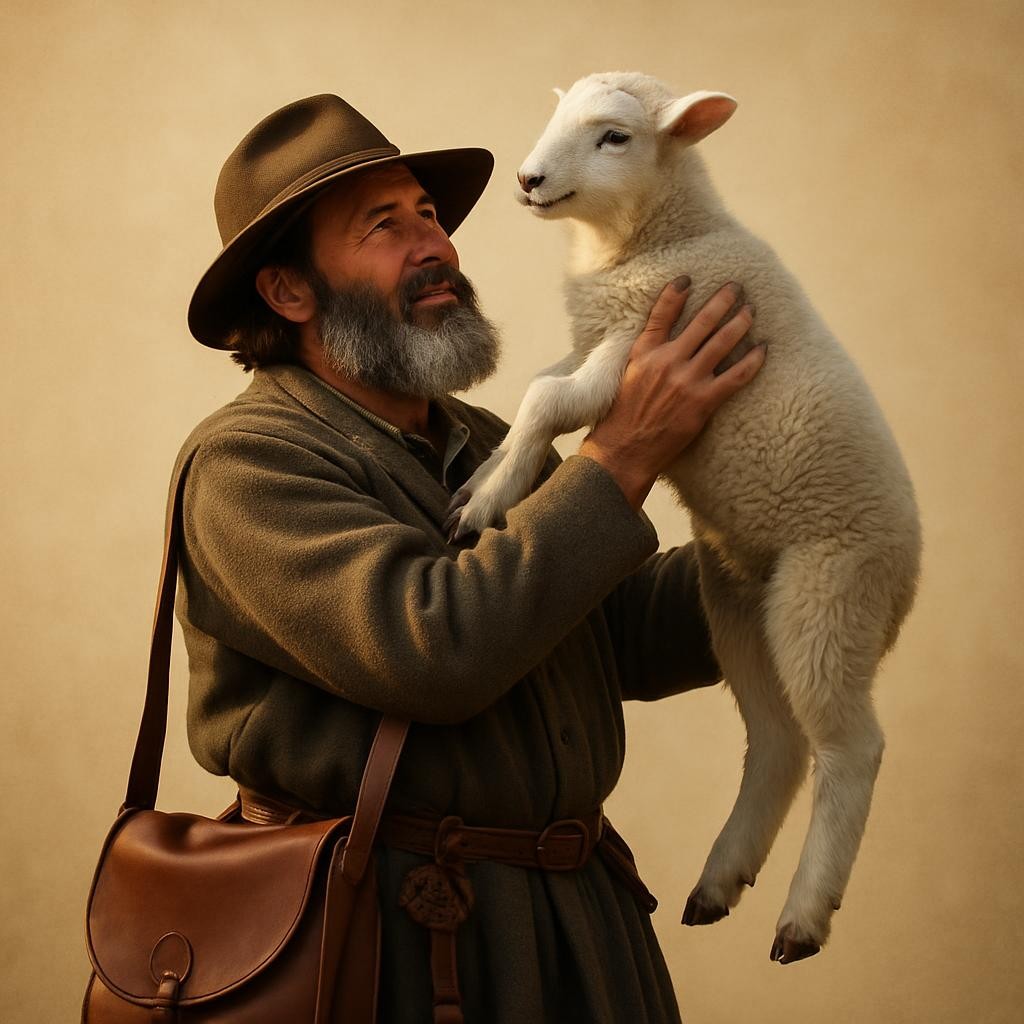
God’s Relentless Love for You and Me
Part 1: The One Who Was Found
Introduction: Setting the Stage
To truly understand the “Parables of Joy” in Luke 15, we have to look at the audience. It was a room divided. On one side, you had the “outsiders”—the tax collectors and sinners, the poor, the blind, and the lame—all drawing near to hear Jesus. On the other side stood the Pharisees and Scribes, the religious elite, muttering under their breath: “This man receives sinners and eats with them” (Luke 15:1-2).
Jesus noticed the grumbling. In response, He didn’t give a lecture on law; He told three stories that would change the way we see God forever. Seeking the lost is not just a New Testament whim but the ultimate expression of God’s love as seen in His promise:
“For God so loved the world, that he gave his only Son, that whoever believes in him should not perish but have eternal life. For God did not send his Son into the world to condemn the world, but in order that the world might be saved through him.” (John 3:16-17) [1]
By quoting this, Jesus reveals a God who does not merely wait for the lost to find their way home, but a God who relentlessly pursues them. He counters the cold legalism of the leaders with a love that prioritizes salvation over condemnation.
Historical Setting: From the Seashore to the Table
While we don’t have a specific GPS coordinate for exactly where Jesus told these three parables, we know a great deal about the atmosphere of His ministry. Often, we see Jesus teaching in grand, open spaces:
“That same day Jesus went out of the house and sat beside the sea. And great crowds gathered about him so that he got into a boat and sat down… and he told them many things in parables.” (Matthew 13:1-3)
This “seaside” ministry shows the sheer scale of His reach, but Luke 15 feels more intimate. Most research suggests this took place in a village setting while Jesus was traveling toward Jerusalem [2]. By eating with tax collectors, Jesus moved from the public shore to the private table, turning a simple meal into a battlefield for the soul. He used these everyday settings to reveal that whether on a crowded beach or at a controversial dinner table, God refuses to lose a single person to death, rejoicing instead in life with Him in heaven.
The Risk of the “Open Country”
Jesus begins with a question that would have hit home for His listeners:
“What man of you, having a hundred sheep, if he has lost one of them, does not leave the ninety-nine in the open country, and go after the one that is lost, until he finds it?” (Luke 15:4)
From a business standpoint, this looks like a reckless move. Leaving ninety-nine sheep in the “open country” exposes the bulk of the flock to predators and the elements. However, the historical context reveals a beautiful layer of communal trust. In the ancient world, shepherds rarely worked in isolation; they often watched over their animals in collective groups [4].
When Jesus pursues the wandering soul today, He isn’t abandoning the faithful. Instead, He calls on us—the disciples, the leaders, and the “ninety-nine” standing together—to hold the line and care for one another. This allows the Good Shepherd to do what only He can do: go into the darkest thickets to rescue the one who has lost their way. His love is so focused that He leverages the strength of the community to ensure the safety of the individual.
The Gentle Rescue
Once the Shepherd moves from the community of the 99 into the isolation of the wilderness, the tone shifts from risk to rescue. When He finally finds the sheep, He doesn’t scold it. He doesn’t drive it back with a staff.
“And when he has found it, he lays it on his shoulders, rejoicing.” (Luke 15:5)
Think about the state of that sheep. It was likely frightened, exhausted, and perhaps injured [5]. It couldn’t walk back even if it wanted to. This is the heart of the Gospel: Jesus takes the initiative. He finds us in our confusion and carries us home on His shoulders through His grace and forgiveness [6].
A Symphony of Grace
The parable ends not in a quiet return, but in a massive celebration. The shepherd calls his friends and neighbors together, saying, “Rejoice with me!” Jesus concludes with a powerful promise: There is more joy in heaven over one sinner who repents than over ninety-nine who think they have no need for it. While the Pharisees stood outside the circle of grace, judging the “impropriety” of Jesus’ guest list, Jesus was inviting them into a “grand symphony of grace.”
Conclusion: He is Looking for You Today
The significance of the Lost Sheep is that it shows us a God who refuses to lose a single soul. He endured the ultimate “open country” of the Cross to find us.
Whether you feel frightened, lost, or abandoned today, remember this: Christ is not waiting for you to perform or “get your act together.” He is actively seeking you out to take away your burdens. He is the True Shepherd who carries the wanderer home and calls the whole world to celebrate.
Jesus Christ is looking for you today. Are you ready to be found?
A Prayer for the Lost
Heavenly Father, we thank You that You are the God who seeks and saves. We lift up those today who feel lost in the “open country” of life—those who are frightened, confused, or burdened by their own wandering. We ask that they would feel the strength of Your grip as You lift them onto Your shoulders. Soften the hearts of those who are hiding, and grant the Church the grace to stand together as a community that reflects Your love. May the joy of heaven break through today for every soul that returns home to You. In Jesus’ name, Amen. joy of heaven break through today for every soul that returns home to You. In Jesus’ name, Amen.
Tomas
“The-Way“
References:
- [1] The Holy Bible, English Standard Version (Wheaton, IL: Crossway Bibles, 2016), John 3:16-17.
- [2] Robert H. Stein, The New American Commentary: Luke (B&H Publishing, 1992), 402.
- [3, 4] John H. Walton & Craig S. Keener, eds., NIV Cultural Backgrounds Study Bible (Zondervan, 2016), 1779.
- [5, 6] Walter L. Liefeld and David W. Pao, Luke: The Expositor’s Bible Commentary Revised Edition (Zondervan, 2007), 249-250.
 Site Title
Leave a comment